
 4 min read
One of the most effective ways to begin integrating AI into day-to-day teaching and IT operations is to build on the vendors and devices your district already knows and trusts. In this blog, we highlight native AI tools from our established partners and share practical insights from OETC member advisors on how these solutions can empower educators, streamline management, and support technology leaders across K-12 and higher education.
Innovations for Interactive Displays & AV Equipment
Samsung
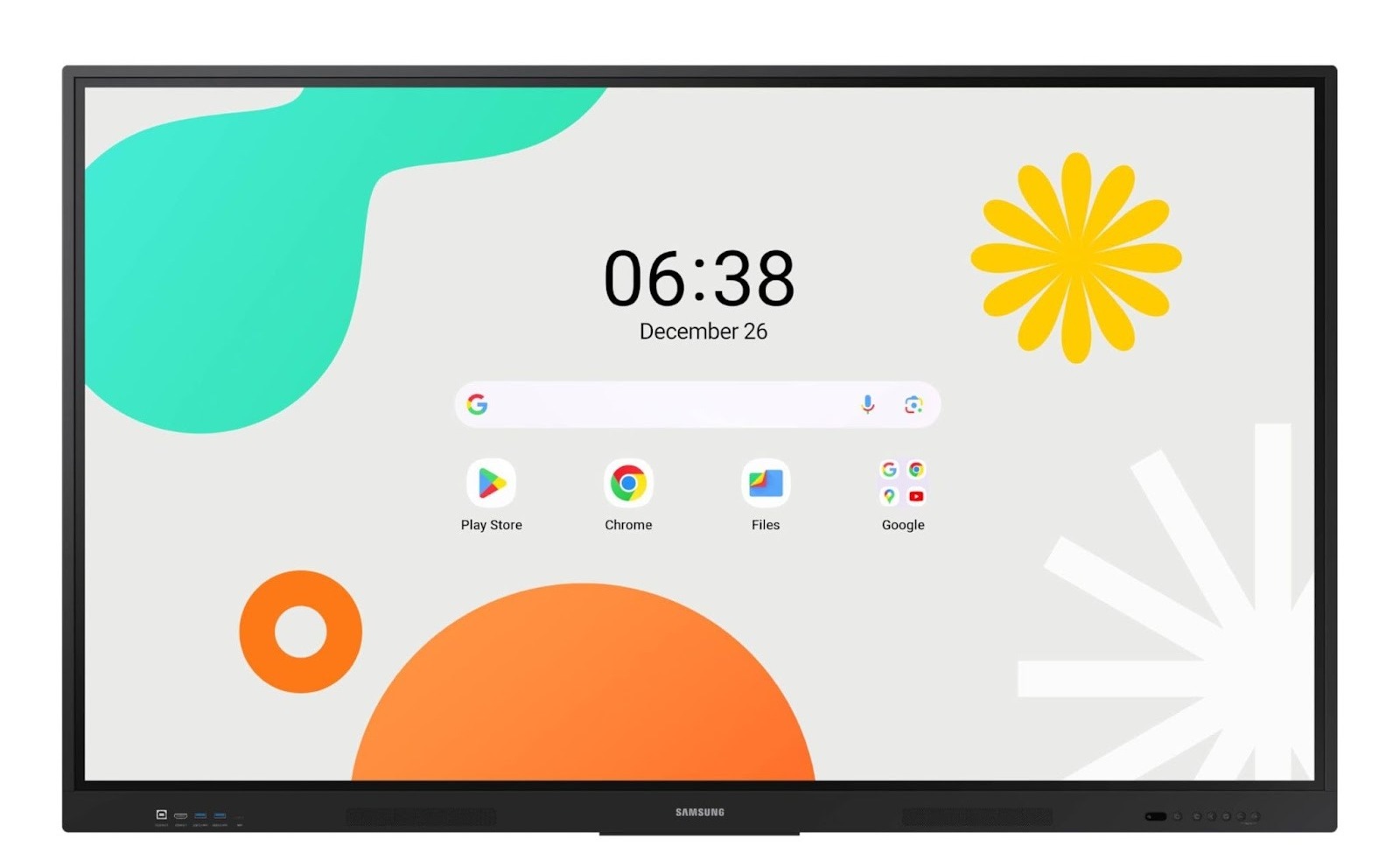
The WAD Series from Samsung offers several AI integrations designed to assist teachers in the classroom. This series is Google Enterprise Devices Licensing Agreement (EDLA) certified, which brings familiar Google apps directly to the board. Instructors can connect with Docs, Slides, and Gemini in the Classroom directly within the panel. Additionally, the WAD series includes the Circle to Search feature already available on Android phones and speech-to-text to answer impromptu questions.
These WAD displays also provide better accessibility options for students. When connected to a microphone, the panel’s natural language processing AI can provide live captions and real-time translation. The system can also use generative AI capabilities to create summaries and quizzes for students to review lessons.
Newline Interactive
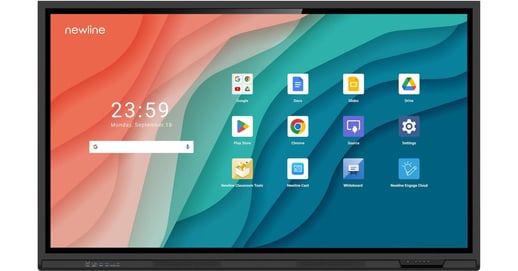
The Newline Q Pro series interactive displays are equipped with a suite of innovative features designed to enhance the education experience. The integration of Merlyn AI and Google Workspace for Education not only facilitates voice control but also harnesses Google’s AI tools to streamline teaching processes. Its AI whiteboard tools transform handwritten content into digital text and shapes, while also distinguishing fingers, palms, and smart pens to change the size and pressure of digital pens or erasers. The real-time translation feature provides instant language assistance, breaking down barriers for multilingual classrooms. Additionally, the content creation capabilities enable educators to tailor learning materials by rewriting text for different proficiency levels, creating interactive quizzes, and recommending relevant images and videos, fostering a more inclusive and interactive learning environment. Lastly, the Q Pro offers an optional 4K auto-framing camera, helping to keep attention focused on instructors.
Logitech

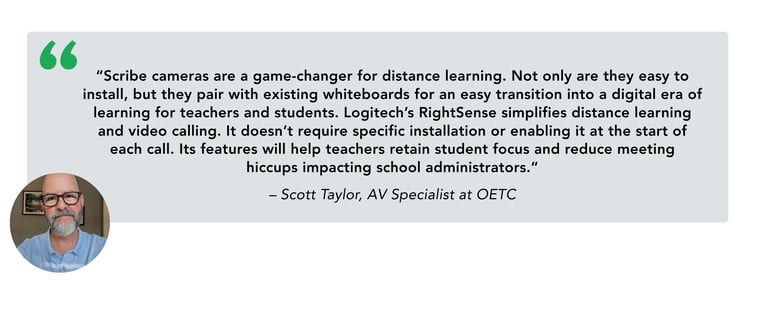
The Scribe camera from Logitech enhances the hybrid learning experience, enabling remote students to see, hear, and understand their instructors while also engaging with the whiteboard. It offers built-in AI integrations to enhance contrast in dry-erase markers, detect sticky notes, and provide a clear view of the whiteboard by making obstructions, such as hands, transparent.
.png?width=526&height=263&name=Front%20(1).png)
The Rally Bar from Logitech enhances the hybrid learning experience through its RightSense technology, which integrates RightSight, RightLight, and RightSound. RightSight keeps all participants effectively framed using features such as person detection, active speaker tracking, and multi-stream views, creating an inclusive atmosphere. It intelligently adjusts camera views and seamlessly switches between different cameras to minimize redundancy and improve engagement.
On the audio front, RightSound employs AI-driven noise suppression to eliminate background distractions, ensuring clear communication. It also includes voice equalization for balanced volume levels, echo suppression to reduce overlapping sounds, and active speaker focus that captures the current speaker's voice distinctly using beamforming microphones. Together, these features significantly enhance both visual and audio quality during video conferences.
Conclusion
The integration of AI technologies in educational settings presents a transformative opportunity for school districts to enhance teaching and learning experiences. By leveraging trusted vendors and innovative tools, such as interactive displays, cybersecurity solutions, and filtering software, CIOs can create inclusive, engaging, and personalized learning environments for all students. As we've seen through the insights from our member advisors and the featured technologies, these AI integrations not only streamline educational processes but also empower educators to meet the diverse needs of their classrooms more effectively.
